You’ll find more in an extensive bank statement than only a simple ledger of transactions. Account overviews, notices, explanatory statements, text, and other pages that contain the details a bookkeeper really needs.
If the sole goal is to integrate transaction data into an accounting system or spreadsheet, it may not be necessary to process all of the data. A more organized workflow starts by identifying the useful pages before creating the output files.
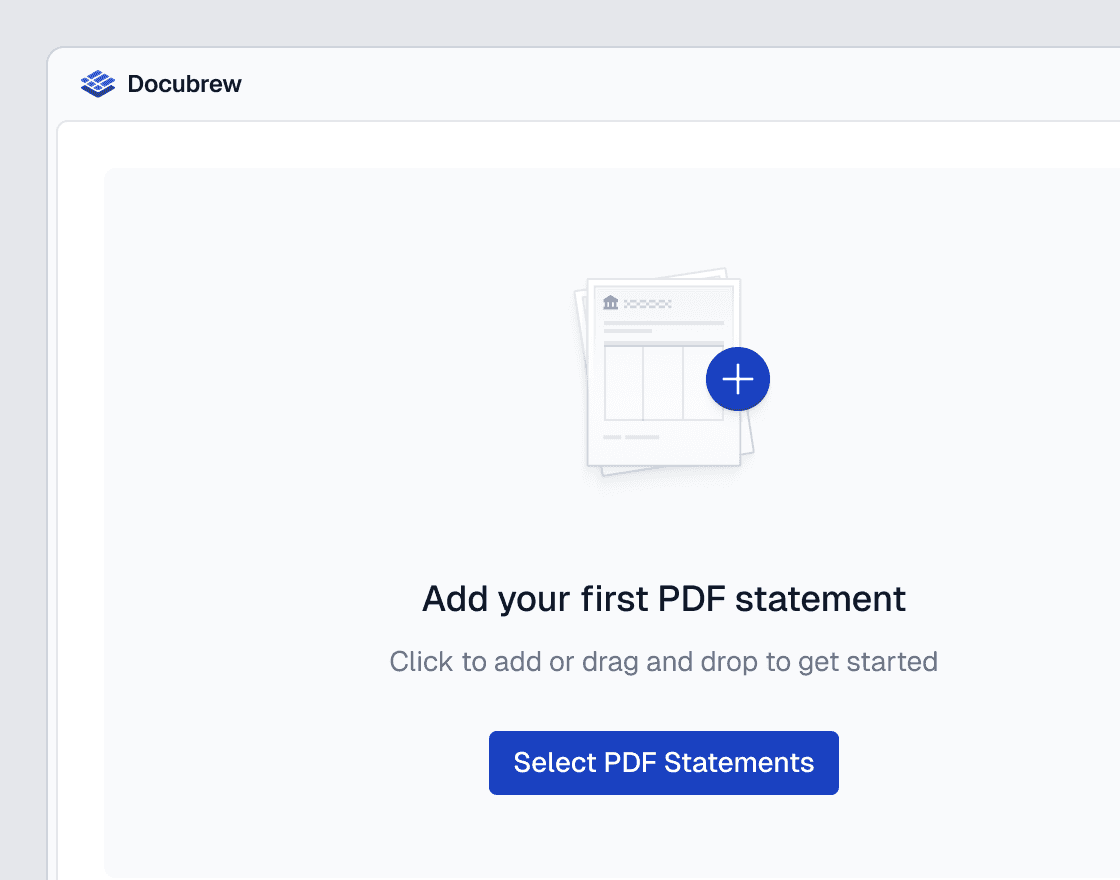
Image credit: docubrew.com
It’s Not Meant to Mean More Data.
Look at the company that is looking over its banking activities over several months. Each PDF could contain 10 or more pages, but only a small portion of each document contains the table of transactions required for accounting tasks.
The manual copying of those tables can be a solution however, it’s slow and prone to typos. Businesses can instead convert bank statements to Excel while limiting the conversion to relevant pages.
Docubrew provides a page preview that lets users review the PDF before deciding on what gets processed. Disclosures, cover sheets, and other pages that aren’t needed can be omitted.
Get More Control by Previewing first
Automation is most useful when the person who is using it is able to observe what’s happening.
Rather than simply processing a document in a blind way, Docubrew lets users preview statements before they begin the conversion. Docubrew utilizes the original statement to extract data instead of trying to estimate financial values.
When you convert a bank statement into Excel it gives the user an opportunity to make sure the right pages have been chosen and to examine the extracted details prior to downloading the final product.
This is a basic but critical checkpoint when pertains to financial records.
Exports should be determined by the destination
After that, you’ll be asked about the plans you have to do with your transactions.
Excel is a great tool when the bookkeeper needs to sort information, check rows or alter data. CSV could be a good alternative if you’re planning to transfer the data to another system. Docubrew also allows QBO output.
Someone who needs to convert bank statements into CSV, for example one can create an CSV instead of creating an Excel workbook and then manually changing formats afterward.
Docubrew is compatible with accounting programs like QuickBooks®, Xero®, and FreshBooksand also spreadsheet-based workflows.
Scanned paper statements can be used to be integrated into the same workflow
Selective conversion doesn’t only apply to digitally generated PDFs.
Sometimes, companies have statements from the past which are available only as paper scans. Docubrew can scan PDF documents, which includes statements.
This could be beneficial for bookkeeping that is based on historical data where the most recent data was digitalized but older statements were scanned off paper. The documents could be converted by similar methods and subsequently reviewed prior to exporting.
Process Locally or Use Cloud
It is essential to take into consideration the handling of documents and their output.
Docubrew’s Windows Desktop application converts documents locally to the client’s PC. If you prefer browser-based processing cloud, the cloud option secures uploaded files and, according to Docubrew it automatically deletes deleted and modified documents within 24 hours.
Ultimately, converting a bank statement to Excel shouldn’t mean feeding every page of a document into an Excel tool and hoping that the result is beneficial.
Start by looking at the pages that contain the information you require. Check out what’s been extracted. Select the appropriate format to complete the next task in accounting.
A better financial workflow may begin with less processing however, it is by intentionally making less processing.