The month is now over. The sales were great and the P&L reported a profit and there was no sign of anything to be seriously in error.
Then, you should check the restaurant’s bank account.
The number may not be exactly what you’d hoped for.
This gap is a problem for restaurant owners because they think that profit and cash availability should have the same story to tell. The two don’t line together. The P&L is a measure of financial performance. On the other hand, the bank account is a reflection of the time when money flows in and out.
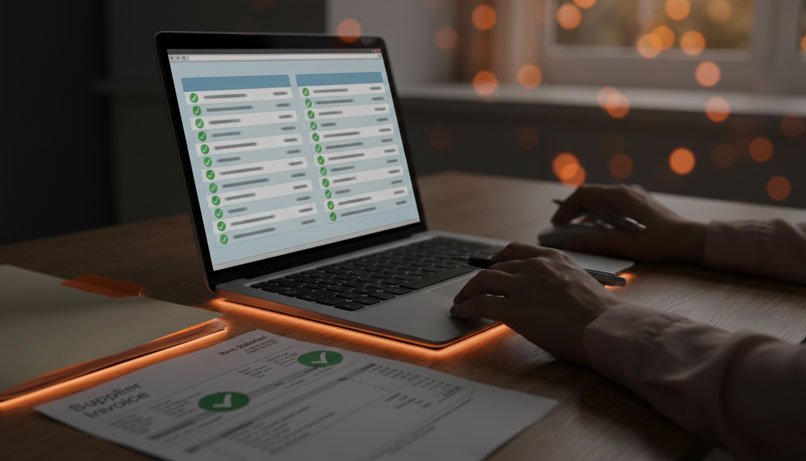
Understanding the different aspects will help restaurant owners adjust their views on the restaurant’s finances.
Imagine what goes on during a typical workday. Customers pay for food. The employees must be paid. You will receive invoices for food and beverage deliveries. Rent is nearing. Credit card payments are timed. Sales tax is collected, but the money has a responsibility.
The next week’s buying has already begun.
If you just look at the revenue or the final profits, you’ll not be able to see a lot of this activity.
Prime Cost could be the key to the answer
If restaurant profits begin to move in the wrong direction, food, beverage, and labor costs deserve focus.
Together, the cost of the items sold and labor together make up the bulk of the cost. Bookkeeping Chef’s supplied guidance places prime cost at roughly 60% to 65 percent of revenues for a variety of establishments, and emphasizes the importance of monitoring weekly rather than waiting until the final day of the month.
It is much more crucial to be able to spot the changes before they occur rather than obsessing over an exact percentage.
Imagine that the restaurant’s performance is generally within its target, but this past week it increased. Perhaps the overtime rate increased. Maybe the costs for beverages were stable while food costs grew. The chef may look over menus and portions, waste or vendor invoices, as well as buying if the percentage of food is higher.
The percentage is the key. The restaurant’s activity is the answer.
A weekly report makes the conversation possible, while everyone will be able to recall what occurred.
A few weeks later After that, the details become more difficult to understand.
After the vendor bills are paid
A restaurant could purchase the ingredients this week but have to pay for these items later. This can help explain why profit alone is not enough to answer every cash question.
Vendor invoices should be recieved and logged. Doing this manually in a busy business with many suppliers could become an enormous administrative burden.
Automating the process of paying bills will help to organize the process through reducing the repetition of payments and bills. Bookkeeping systems that are connected can give owners a better view of their obligations, even though they haven’t yet been paid.
It’s advantageous because, taken as a whole the balance of a restaurant’s bank account might appear to be better than its actual short-term financial position.
Today, there may be an amount of $80,000 in the account. This number can mean something different in the event that it is affected by other factors like rent, payroll, vendors and other obligations for the coming days.
That leads naturally to cash flow forecasting.
The better question to ask yourself is “What will happen to our money after we receive the money and have met the commitments we’ve identified?”
This distinction is essential when deciding on the appropriateness of the right week to buy an additional purchase or replace equipment, or keep the liquidity.
You might not have been entitled to all the money you believed.
The sales tax illustrates this very well.
A restaurant collects money from customers that eventually must be disposed of according to its tax obligations. If those dollars are mentally placed in the same category as operating cash, the balance of the bank may create a false sense of the amount in the bank to spend.
The consistency of the records helps restaurants comply with sales taxes while giving the management a realistic view of their finances.
This is a reason why restaurant accounting works better when financial responsibilities aren’t considered as distinct islands.
Prime cost affects margin. COGS (cost of goods sold) and future payments are impacted due to purchases made by vendors. Payroll has an impact on the amount of cash available and also the labor percentage. Cash flow is affected by sales tax. P&Ls are used to track financial performance. Forecasting can be helpful to management.
The pieces link.
Bookkeeping Chef uses restaurant-focused reporting and system integrations to integrate these pieces. For operators who don’t want to spend their nights manually reconciling financial data, specialized outsourced bookkeeping services can handle much of the accounting workload without removing the owner from the financial conversation.
It’s the last part that counts.
It’s not the intention of restaurant owners to stop checking their books because somebody else does. It’s essential that owners are informed so that they are aware of the situation.
When the P&L reports that the restaurant earned cash, yet the bank account feels extremely unbalanced, don’t think that any of the numbers can be wrong.
Ask them about what transpired between them.
This will reveal more about your company than any number.