A manufacturing company gets an important contract. Its monthly production needs are increased, but the manufacturing facility isn’t gaining floor space, experienced employees or hours of work per daytime. While adding another shift may temporarily help, it could be a source of new work in the form of supervision, training, or quality-control needs.
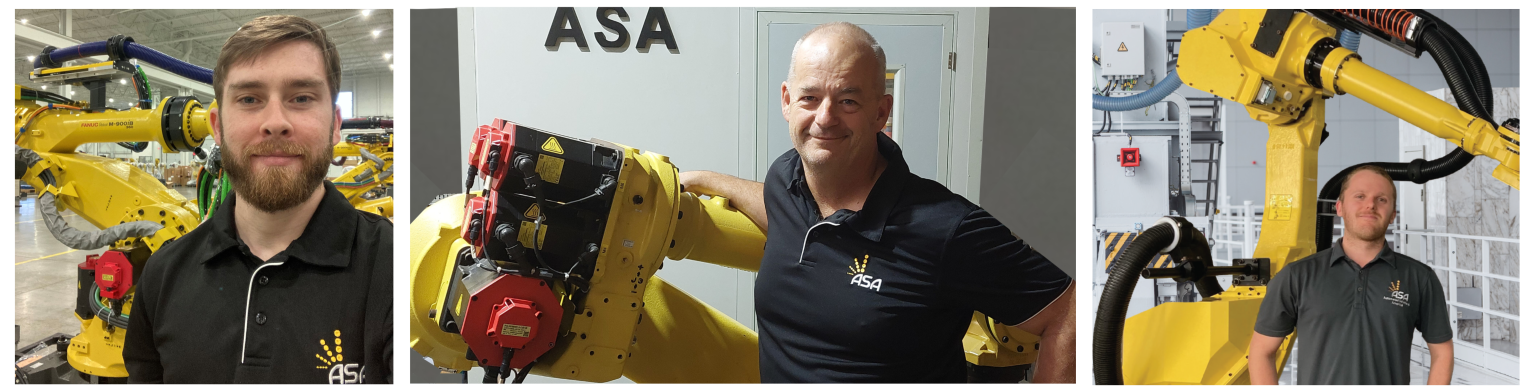
Image credit: automatedsolutions.com.au
Situations like this reveal an important purpose of robotic automation. Robotics isn’t simply about replacing people with a machine. It is able to transform the way that manufacturers utilize their existing capacity for production.
Take a look at the minutes that vanish between products
Inefficient manufacturing may not be obvious. If an operator takes 15 seconds arranging a part for 10 seconds, then another 10 seconds applying the material, and a few minutes transferring it onto the next task. With a single component it’s a small difference. When repeated a thousand times the seconds could result in significant production delays.
Same goes for waste material. The addition of a tiny amount of additional coatings or dispensing material in a huge production line can lead to a significant expense.
The companies that are considering robotic automation Australia can benefit by analyzing these tiny routine losses before they decide which equipment to buy. The needs analysis conducted by ASA is designed to uncover bottlenecks as well waste, quality issues and other process limitations that could affect an automation project.
Robots have to integrate into the process.
A robot’s selection is only one engineering decision. The system may also need guarding, tools and controls, sensors fixtures, conveyors electrical integration, and communication with existing production equipment. Engineers must take into consideration the robot’s reach and payload, as well as how it interact with its surroundings and move about.
ASA’s approach to FANUC robot automation encompasses concept development, system design along with CAD Simulation and offline Programming. Digital simulation lets engineers test configurations and estimate cycle times before the completed system is put into operation at the factory floor of the customer’s. This is particularly helpful in situations where space is not available or when new robotics need to be integrated into an existing production line.
Painting and dispensing show why Repetability is Important
Certain manufacturing processes show the importance of controlling movements. Imagine coating hundreds of components. The goal isn’t just the process of completing every component in a short time. It is important to control the speed, distance, and the movement of every component from the beginning until the final.
ASA has specialists who work on paint and dispensing processes across various industries, including automotive and aerospace. Industrial robotic automation in these settings will allow for repeatable movement as well as limiting the exposure of workers to physical demands or ones that may cause harm.
A better management of materials that are discarded can aid in productivity improvement by decreasing the amount of unneeded material used.
Even after the installation the system requires individuals
Automatism isn’t a substitute for manufacturing knowledge. The abilities needed to manage, maintain and run the process change.
Employees must be instructed to safely use equipment in order to identify any abnormalities as well as troubleshoot components that are malfunctioning and carry out necessary maintenance. The production needs can change with time, which means that programs and processes will require adjusting.
ASA provides training on site in safe operation, programming, troubleshooting, in addition to maintenance for electrical and mechanical components. They also provide servicing and assistance for assessing the condition of equipment and taking care to address wear throughout the lifetime of the system.
Capacity is about more than working faster
For Australian manufacturers, increasing capacity doesn’t necessarily mean buying a larger building or continually adding workers to repetitive processes. The best question to ask is whether the existing production process can still be improved.
ASA has been working on and integrating automation systems in Australia since 2002. We also help with projects abroad. Its approach combines needs analysis as well as engineering simulation. FANUC integration training, and service.
Automating for automation’s sake isn’t the objective. An investment-worthy system should offer a manufacturer measurable results, which include more reliable production, higher quality, safer methods with less waste, or a greater capacity.